
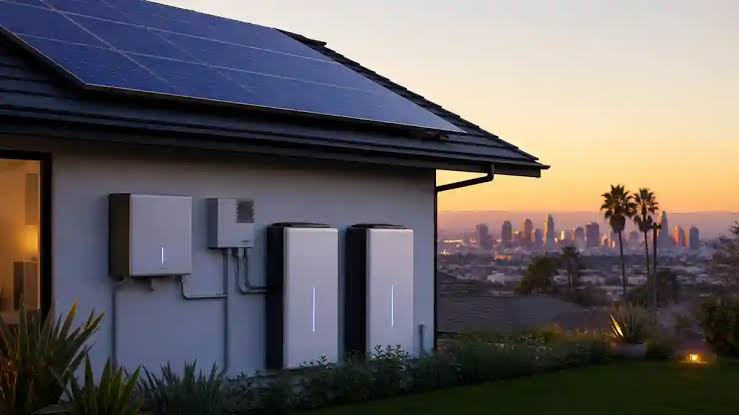
Solar batteries are generally associated with storing excess electricity produced by solar panels during the day, then making that energy available again once solar generation falls. But solar is not the only source a battery can draw from. Many home battery systems can also charge using electricity from the grid, creating another way for households to manage when they buy and use electricity.
As Time of Use tariffs, free electricity periods and other more flexible energy plans become more common, that capability can be particularly useful. A battery may be charged when grid electricity is cheap and discharged later when electricity rates are higher, while grid charging can also help maintain a backup reserve or compensate for periods of lower solar generation. Whether it actually reduces energy costs depends on the battery system, electricity tariff and how energy moves through the house, making grid charging an important consideration when choosing how a solar battery will be used.
Can Solar Batteries Charge From The Grid?
Yes, many solar batteries can charge directly from the grid as well as from rooftop solar. Grid charging simply means using electricity supplied through the grid connection to charge the battery, rather than relying only on excess electricity generated by the home’s solar panels. Once stored, that electricity can be used by the house in much the same way as energy stored from solar generation.
This gives a battery access to two potential sources of energy. During the day, excess solar generation can be stored rather than exported to the grid, while at other times the battery may be able to draw electricity from the grid. This can become particularly useful when electricity prices change throughout the day, solar generation is lower than expected or a household wants to maintain stored energy for later use. As energy plans increasingly include Time of Use rates, off peak tariffs and periods of very cheap or free electricity, the ability to choose when a battery charges can become an important part of how the system manages energy costs.
Whether grid charging is possible depends on the battery system, inverter and the way the system has been configured. Some batteries are designed with grid charging capability built in, while others rely on a compatible hybrid or battery inverter to control where the charging energy comes from.
How this works also differs between AC coupled and DC coupled systems. In an AC coupled battery system, grid electricity can be converted from alternating current (AC) into direct current (DC) by the battery inverter before being stored. A DC coupled system typically connects the solar panels and battery through a hybrid inverter, which manages the flow of electricity between the solar PV system, battery, house and grid. Where grid charging is supported, the inverter can also convert grid electricity into the DC electricity required to charge the battery.
Having a battery that is technically capable of grid charging does not necessarily mean it will charge from the grid automatically. Grid charging, sometimes referred to as force charging, may need to be enabled or scheduled through the inverter or monitoring app, with settings controlling when the battery can charge, how much energy it draws and the level of charge it should reach. More advanced smart batteries and energy management systems may also adjust charging according to electricity tariffs, household consumption or expected solar generation. The available controls vary between battery and inverter manufacturers, which makes understanding how grid charging is managed just as important as knowing whether a battery supports it.
Can You Have A Battery Without Solar?
Yes. Although home batteries are usually associated with solar panels, a battery can be installed without a solar PV system and charged entirely from the grid. Instead of storing excess solar generation during the day, the battery draws grid electricity at selected times, stores it and makes that energy available for the house to use later.
This is generally achieved with an AC coupled battery system. Because the battery has its own inverter, it can operate independently of a solar inverter and does not require rooftop solar to provide its charging source. Grid electricity enters the home as alternating current (AC), which the battery inverter converts into direct current (DC) for storage. When the stored energy is needed by the house, the inverter converts it back into AC electricity that household appliances can use.
Installing a battery this way allows a household to practise load shifting, where electricity is purchased and stored when grid electricity is cheaper and used later when electricity rates are higher. This can be particularly useful in homes where electricity consumption is concentrated in the late afternoon and evening, when people return home and begin using air conditioning or heating, cooking, hot water and other energy intensive appliances. A household that is relatively quiet during the day but has a pronounced evening peak may therefore have more opportunity to shift its grid consumption than one whose electricity use is already concentrated during cheaper periods.
It may also suit households that cannot install solar panels but still have access to an energy plan with a meaningful difference between cheap and expensive electricity periods. Renters with permission to install a battery, homes with unsuitable or heavily shaded roofs, apartments or properties where rooftop solar is impractical may still be able to use battery storage to take advantage of off peak or free electricity periods. Households with higher evening electricity consumption, or those that place particular value on backup power during blackouts, may have another reason to consider this type of system.
The battery is not reducing the amount of electricity the household needs. Instead, it changes when electricity is purchased from the grid and when it is used by the house. Whether the difference in electricity rates is large enough to justify the cost of installing and operating a battery is a separate calculation, which becomes particularly important when battery efficiency, charging cycles and the household’s energy plan are taken into account.
When Does Grid Charging Make Sense?
Grid charging can make considerable sense when electricity is available free or at a substantially lower price than the electricity a household would otherwise buy later. A Time of Use energy plan may allow a battery to charge during a cheaper off peak period and then supply the home during more expensive peak periods, whether the battery is installed alongside solar panels or operates as an AC coupled battery without solar. Free electricity periods can make this opportunity even stronger. Eligible households in New South Wales can now access energy plans that provide free electricity during designated periods in the middle of the day, including the Solar Sharer Offer, while retailers such as OVO Energy and GloBird Energy have offered plans with their own free electricity windows. A compatible battery can store some of this free grid electricity and make it available after the free period has ended.
For a household without solar, this creates a practical way to use a battery for load shifting without generating any electricity of its own. Rather than relying solely on conventional off peak rates, the battery can potentially absorb free or very low cost grid electricity and use it when electricity rates are considerably higher. For a household that already has solar panels, grid charging provides an additional source of energy alongside solar generation. It can be particularly useful when solar production is lower, electricity is unusually cheap or free, or the household expects higher energy consumption later. Smart batteries and energy management systems can make this increasingly sophisticated by using electricity tariffs, weather forecasts, expected solar generation and household consumption to determine when it is most advantageous to charge from solar and when it makes more sense to use the grid.
These opportunities are becoming more relevant as Australia’s electricity system changes. Increasing amounts of rooftop and utility scale solar can create periods of abundant electricity through the middle of the day, followed by higher demand later in the afternoon and evening as solar generation falls. Energy plans that encourage households to consume or store electricity during these solar rich periods can help move demand towards times when renewable energy is plentiful. For Sydney households choosing a battery now, the ability to respond to these changing electricity conditions may become increasingly valuable over the life of the system. There will still be conversion losses and gradual battery degradation to account for, but where the difference between the charging price and the electricity rate being avoided is substantial, grid charging can provide a genuine opportunity to reduce energy costs.
The value is not limited to electricity prices. Grid charging can also maintain stored energy when solar generation is poor or increase the battery’s backup reserve ahead of severe weather or a possible power outage. For a grid-only battery, it can provide access to low cost energy, load shifting and backup power, while for a solar battery it adds another source of energy when relying on solar alone is not the best option. Rather than undermining the purpose of a home battery, grid charging can make the battery more flexible, allowing it to respond to electricity prices, solar conditions and the changing needs of the household.
What Should You Consider When Choosing A Grid Charging Battery?
Not all batteries that can charge from the grid offer the same level of control over how that capability is used. When choosing a battery system, it is worth looking beyond whether grid charging is simply supported and considering how easily charging can be scheduled, adjusted and automated. Some systems allow charging periods to be set manually through an inverter or monitoring app, while more advanced smart batteries can respond automatically to electricity prices, household demand, solar generation and weather forecasts. For a battery expected to operate for many years, the quality of its smart software and energy management system can be almost as important as the battery capacity itself.
The inverter and overall system configuration also matter. A battery being added to an existing solar PV system needs to be compatible with the existing equipment or installed in a configuration that allows the systems to operate effectively together. A household installing a battery without solar will generally require an AC coupled system capable of operating independently, while a new solar and battery installation may instead use a DC coupled battery with a compatible hybrid inverter. Charging power is another consideration, particularly if the intention is to take advantage of relatively short low cost or free electricity windows. A large battery that cannot charge quickly enough may not be able to make full use of the energy available during that period.
It is also worth considering how much control the battery provides over its backup reserve and charging behaviour. A useful grid charging system should allow the household to decide how much stored energy is kept available for a power outage and how much can be used for everyday consumption. Smart energy management systems can take this further by coordinating the battery with the solar system, smart meter and household loads rather than treating each component separately. Features such as monitoring, automatic tariff optimisation and remote control through an inverter app can make the battery considerably easier to adapt as household electricity use and energy plans change.
Battery capacity, warranty, charging cycles and expected degradation still remain important when comparing home batteries, but grid charging adds another consideration: how intelligently the battery can use the electricity available to it. Systems such as Tesla Powerwall 3, Sungrow battery systems paired with the SH series hybrid inverter, and Enphase IQ Battery 5P demonstrate how battery storage is increasingly being integrated with smart inverters, monitoring and energy management software. The most suitable system is therefore not necessarily the battery with the longest list of features, but one that can be configured around the household’s solar system, electricity use, energy plan and future requirements.


