
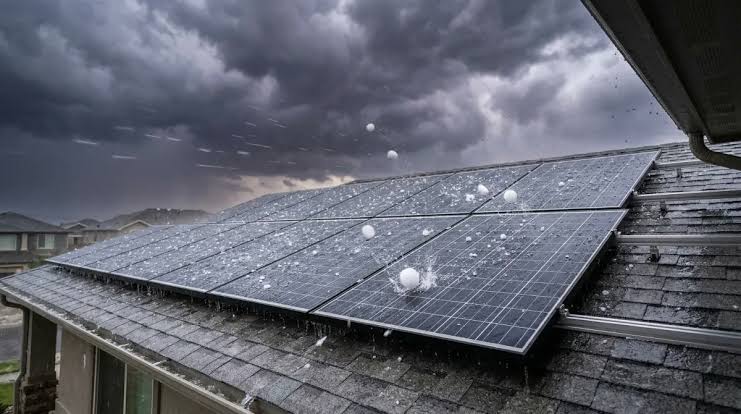
When a solar system continues working after a severe hailstorm, it can be difficult to know whether it has escaped damage or whether a closer inspection is still needed. The inverter may remain online, the monitoring app may continue recording solar energy production and the tempered glass may appear completely intact. However, not all hail damage is immediately visible, and continued power output does not always confirm that every part of the system is unaffected.
Modern solar panels are designed with a degree of hail resistance and are tested to withstand impacts under recognised standards. Even so, real hailstorms vary in intensity. The size and speed of the hailstones, strong winds, repeated impacts, the installation angle and the age of the solar system can all influence how the panels and surrounding components respond during severe storm conditions.
In some cases, solar panel hail damage is obvious. In others, microcracks, weakened seals or damage to mounting rails and wiring may remain hidden until performance begins to decline or another fault develops. This article explains how hail can affect solar panels, what signs may indicate storm damage, when a professional solar panel inspection is worthwhile and what to do after a hailstorm, including the steps to take if an insurance claim may be required.
Can Hail Damage Solar Panels Even If They Look Undamaged?
Yes, although it is less common than many homeowners assume. Modern solar panels are designed to withstand harsh weather and are manufactured using durable tempered glass that is tested against recognised standards, including IEC 61215:2021 and IEC 61730, to demonstrate their ability to resist typical hail impacts. These hail tests help ensure quality solar photovoltaic (PV) modules can tolerate the conditions experienced during many Australian hailstorms, but they do not guarantee that every panel will remain unaffected during every storm.
Real-world hail events are far less predictable than controlled laboratory testing. The size and speed of the hailstones, strong winds, repeated impacts, debris, the installation angle of the panels and even the age of the solar system can all influence whether damage occurs. While severe impacts may crack the tempered glass, many forms of solar panel hail damage are far less obvious. Tiny microcracks can develop within the solar cells beneath the glass, while impacts may also affect mounting rails, wiring insulation or other components without producing visible signs from the ground.
In many cases, a solar system continues generating electricity after sustaining this type of damage, making it easy to assume everything is functioning normally. However, hidden defects can gradually reduce power output, affect long-term reliability or become more noticeable as the panels continue to expand and contract through changing weather conditions. For this reason, the absence of obvious damage should not always be taken as confirmation that a solar system has escaped a significant hail event completely.
How Can You Tell Whether Hail Has Affected Your Solar System?
Some signs of hail damage are immediately obvious, while others develop more gradually. Broken tempered glass, displaced roof tiles or visible damage to the panels after a severe storm should always be investigated. However, many homeowners notice far more subtle changes. The inverter may begin displaying warning messages, the monitoring app may show an unexpected reduction in power output, or the system may produce less solar energy than it typically would under similar weather conditions. In some cases, electrical faults such as a ground fault or earth fault may also occur if components or wiring have been compromised.
The challenge is that these changes are not always immediate. A solar system with microcrack damage may continue operating for weeks or even months before reduced performance becomes noticeable, particularly if the affected area represents only a small portion of the overall array. This is why comparing recent production with previous performance under similar seasonal conditions can often reveal more than a simple visual inspection from the ground.
It is also important to remember that not every drop in production indicates storm damage. Cloud cover, seasonal changes and normal variations in weather all influence energy generation. Looking at the complete picture, including the severity of the hail event, visible signs of impact, system alerts and performance trends provides a far more reliable indication of whether further investigation is warranted than relying on any single symptom alone.
When Should Solar Panels Be Inspected After Hail?
Not every hailstorm requires a professional solar panel inspection, and many quality systems continue operating without issue after severe weather. However, there are situations where arranging an inspection is a sensible precaution, particularly if the property has experienced unusually large hailstones, significant storm damage, or impacts that were strong enough to damage roof tiles, gutters or other parts of the home. A noticeable drop in power output, warning messages from the inverter, or unexpected changes shown in the monitoring app may also indicate that the solar system should be assessed more closely.
A professional inspection goes beyond checking whether the glass has cracked. Depending on the condition of the system, a CEC accredited solar installer or qualified electrician may inspect the panels, mounting rails, wiring insulation and electrical connections for signs of impact or deterioration. Where hidden damage is suspected, further testing such as thermal imaging or electroluminescence imaging may be recommended to identify microcracks or other defects that cannot be seen during a standard visual inspection.
Identifying problems early can help determine whether repairs, replacement panels or warranty support may be required before hidden damage has the opportunity to affect the long-term performance and reliability of the solar system.
Why Hail Damage Should Not Be Left Unchecked
The consequences of hail damage are not always immediate. A severe impact can weaken parts of a solar system without causing an obvious fault, allowing hidden damage to develop unnoticed over time. Small microcracks, compromised wiring insulation or damage to other electrical components may initially have little effect on power output, but continued exposure to heat, sunlight and changing weather conditions can gradually worsen these defects and affect the long-term performance and reliability of the system.
Identifying potential storm damage early provides a clearer understanding of the system's condition before relatively minor issues have the opportunity to become more costly repairs. It can also help determine whether remedial work, replacement panels or warranty support may be appropriate, while providing confidence that the solar panels, inverter and associated components continue to operate safely and efficiently.
This is particularly important if an insurance claim may be required. Having the system professionally assessed while the hail event is still recent makes it easier to document its condition, obtain a detailed damage report where necessary and provide supporting information requested by insurance providers. Even if no repairs are ultimately required, confirming the condition of the solar system after a significant hailstorm can remove uncertainty and help protect the long-term value of the system.
What Should You Do If You Need to Make an Insurance Claim?
If a hailstorm has caused visible storm damage or there is reason to believe the solar system has been affected, documenting the condition of the installation as soon as it is safe to do so can make the insurance claims process much smoother. Photographs of the solar panels, surrounding roof area, roof tiles, inverter displays and any obvious damage provide a useful record of the system's condition immediately after the event. It is also worth checking your monitoring app for any fault notifications or unexpected changes in power output, as these may help establish when the problem first became apparent.
Before arranging repairs or replacing damaged components, contact your insurance provider to understand what is covered under your insurance policy or home and contents insurance. Many insurers require supporting documentation before approving repairs, which may include a professional damage report prepared by a qualified CEC accredited solar installer or electrician. This assessment can help determine whether the damage is limited to individual panels or whether other components, such as the inverter, mounting rails or electrical wiring, have also been affected.
Where the extent of the damage is uncertain, an independent professional assessment can provide the evidence needed to understand what has occurred before repairs or replacement work begins. This is particularly important when the panels appear intact but the system's performance, electrical condition or long-term reliability remains unclear. A detailed inspection and damage report can give both the homeowner and insurer a more accurate basis for deciding what happens next.
If you are unsure whether your system has sustained hail damage, Solar Water Wind can inspect the installation, assess its condition and provide the documentation needed to support an insurance claim where required. Speaking with a qualified solar professional early can help you understand the extent of the damage, avoid unnecessary repairs and move through the claims process with clearer information.


