
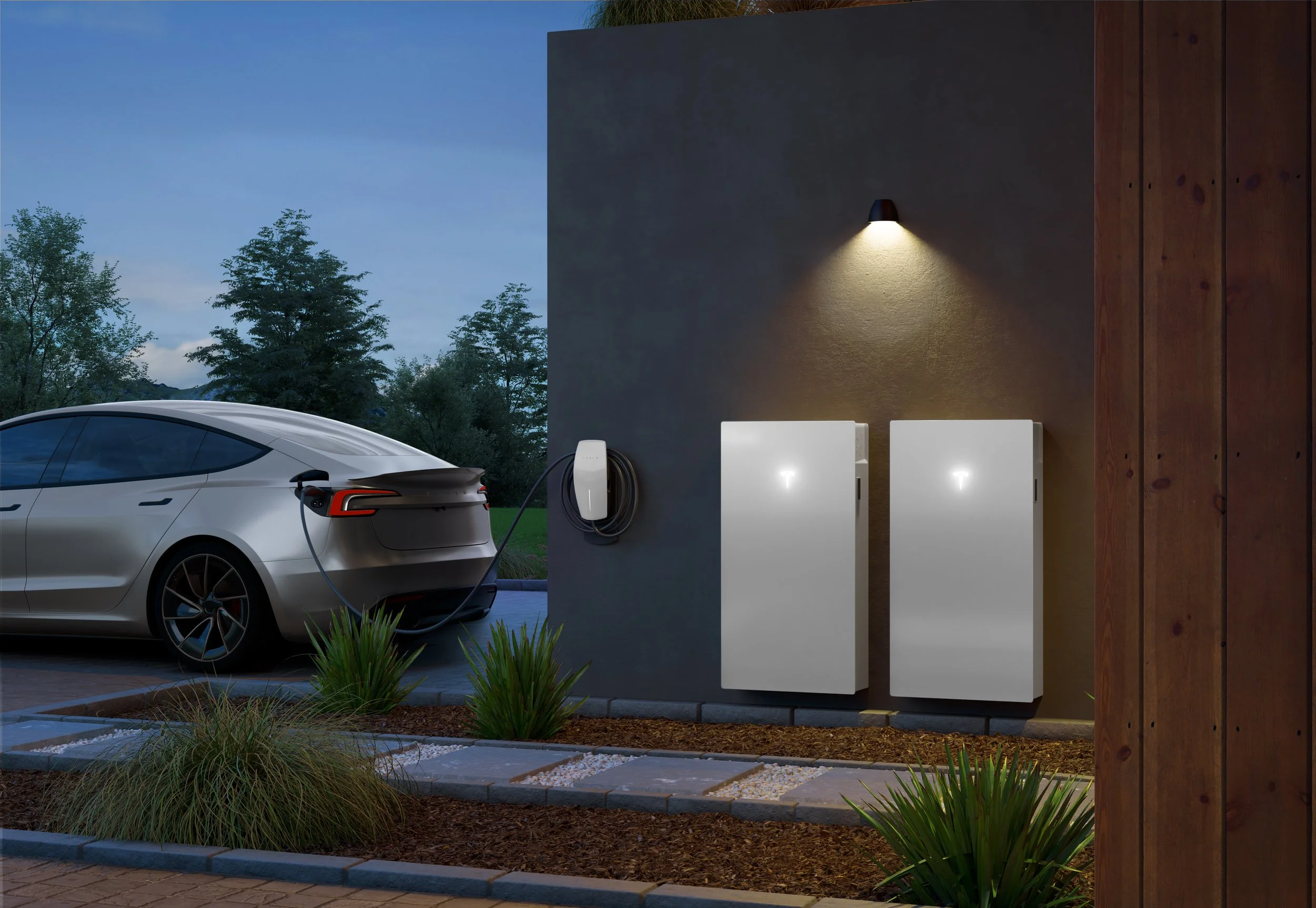
If you’ve been looking into home batteries recently, you’ve probably noticed that most solar battery storage still comes as a set of separate components on the wall. You have the battery on one side, the hybrid inverter or battery inverter on the other, and a series of cables and controls linking everything together. That layout has shaped residential energy storage for years, and for now, it’s still the version you’ll see in most Australian homes.
But storage design is starting to shift. Instead of building an energy storage system from multiple devices, more manufacturers are beginning to bring everything into a single enclosure. The battery pack, battery modules, and inverter hardware sit together, pre-assembled, as one unit. It’s not yet the dominant format, but it is becoming a clearer direction for modern solar + battery setups as lithium-ion and lithium iron phosphate technology evolve.
This article looks at what these all-in-one battery systems actually are, how they work, and why integrated storage is starting to play a larger role in how solar energy is designed for Australian homes
What Are Solar Batteries with Built-In Inverters?
A solar battery with a built-in inverter is a single unit that manages both energy storage and power conversion. In older or more traditional setups, your battery pack, battery modules, battery inverter, hybrid inverter, and solar inverter all sit on the wall as separate pieces of equipment. The battery stores DC solar energy, the inverter converts it into AC power for the home, and a collection of wiring and chargers links everything together.
An all-in-one system removes that separation. The inverter is engineered into the same enclosure as the lithium-ion battery, creating a pre-assembled integrated battery energy storage system instead of a spread-out, multi-box installation. The battery charger, inverter logic, solar battery storage interface, and internal safety controls arrive as one unit, already configured to manage your solar power and backup power without relying on external components.
Most integrated systems use lithium iron phosphate chemistry, which is common across modern lithium-based battery storage equipment and home battery safety standards. Because everything is built together, the system communicates through one control platform rather than several devices trying to share data. This prevents the compatibility issues that sometimes appear with modular batteries, mixed battery systems, or older lithium battery and Li-ion battery setups that weren’t originally designed to operate together.
In simple terms, an all-in-one design gives you one solar battery that acts as the energy storage system, the inverter, and the control centre. It does the same job as a traditional solar + battery bundle, but in a cleaner, more streamlined way that behaves like a single appliance rather than a wall of parts.
How All-In-One Solar Storage Systems Work
An all-in-one system combines the battery pack, inverter module, battery modules, BMS, and battery charger into one enclosure. Instead of having a separate hybrid inverter or battery inverter mounted beside the battery, everything operates as a single energy storage system. Your solar panels feed solar power into the unit, the lithium-ion or lithium iron phosphate battery stores it, and the internal inverter manages the flow of solar energy into the home or battery bank.
With the components sitting together, the system doesn’t rely on long cable runs, multiple shutdown devices, or several monitoring platforms. This reduces wiring, improves installation safety, and keeps the system operating smoothly when it switches between using, storing, or supplying backup power during outages. It also simplifies compliance because the equipment is tested as one pre-assembled battery system rather than several mixed battery systems from different battery partners.
Because the architecture is different, there are a few things you need to consider before choosing an all-in-one unit. Some designs are modular and allow extra battery modules to be added later, while others have fixed capacity, so you need to know whether you want room for expansion. The level of blackout protection varies; some units can supply pass-through power during an outage, while others offer limited backup power or none at all. You also need to check how the system handles 3-Phase Power, because not all integrated home batteries can support larger homes, off-grid solar power systems, or heavy appliances.
In simple terms, all-in-one systems work by reducing the number of external components and allowing the battery and inverter to function as one appliance instead of a collection of separate devices.
Where All-In-One Batteries Make Sense
All-in-one battery systems work well when you want a cleaner, more compact setup without multiple devices mounted across the wall. Because the battery pack, inverter module, and battery modules are housed in one enclosure, they suit homes with limited installation space or areas where exposed wiring isn’t ideal.
They also make sense for new builds or renovations where you want the energy storage system to sit neatly in one location instead of spreading battery systems, shutdown switches, and cabling across different surfaces. With fewer external components, maintenance is simpler, and there are fewer connection points to monitor over time, which supports long-term battery safety and stable performance from lithium-ion or lithium iron phosphate batteries.
If you want to know whether an all-in-one battery system is suitable for your home, Solar Water Wind can assess your space, electrical setup, and power requirements to help you choose the right solar + battery configuration for long-term reliability.


