
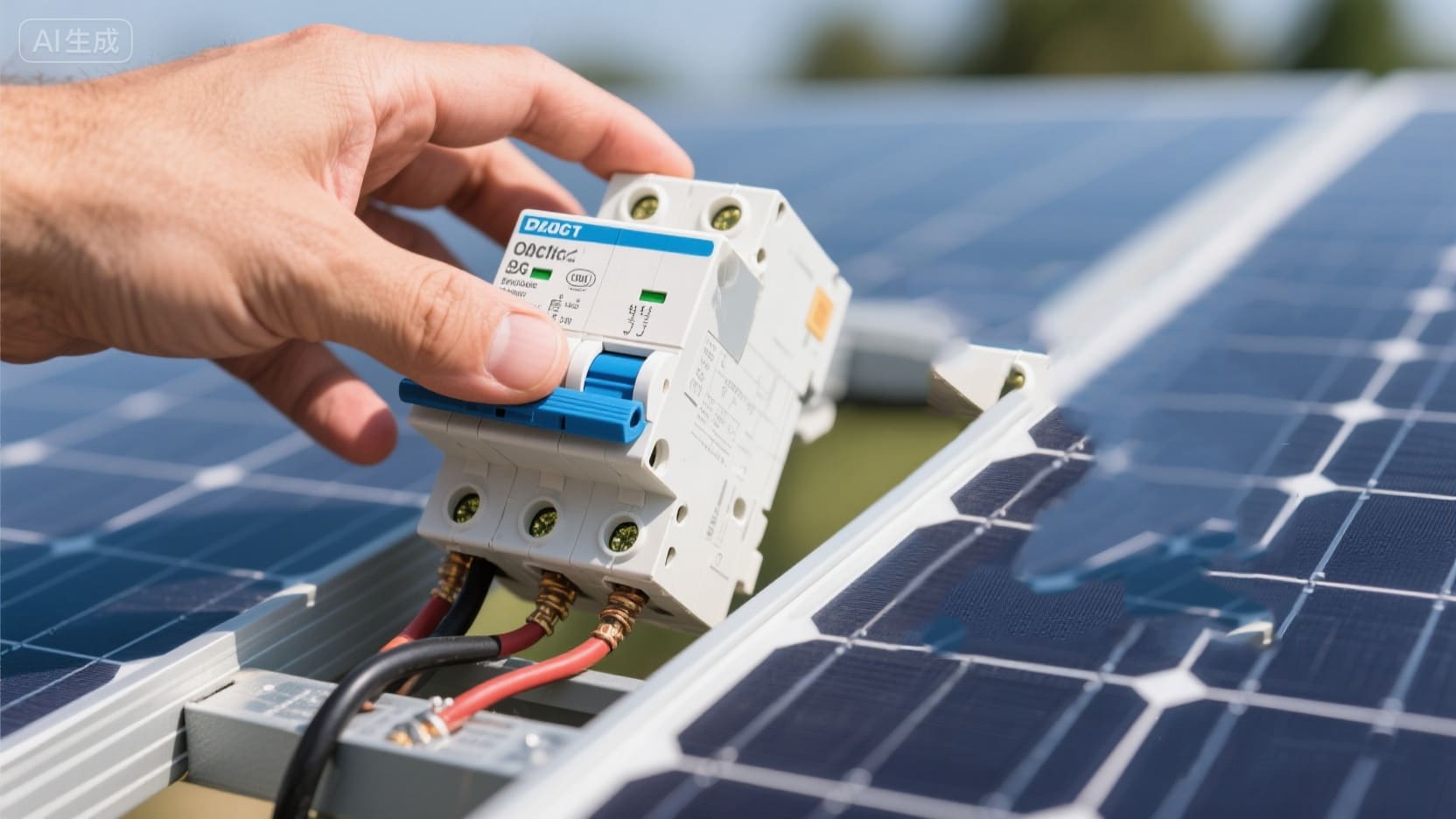
When a solar circuit breaker trips, most homeowners would not immediately think about voltage, current, wiring resistance or inverter protection settings. They usually notice something much simpler: the solar has stopped working, the inverter is off, or the solar switch in the meter box has flicked down again. It can be tempting to treat it like a minor switchboard nuisance, especially if everything turns back on after a reset. But when the solar breaker trips more than once, it is usually worth paying closer attention to what the system is trying to protect itself from.
A solar circuit breaker is not there to randomly interrupt your power output. It forms part of the electrical protection around the solar system, helping respond when something moves outside the conditions the system was designed to operate within. That may involve the solar inverter, AC wiring, a ground fault, short circuit, water-affected cable, grid overvoltage, heat, or an issue inside the electrical panel itself. The visible result may be the same each time, but the cause underneath can be quite different.
This is why the real question is not only how to reset a solar breaker, but why it tripped in the first place. A one-off trip may not tell you much. A breaker that keeps tripping is different. It suggests the solar system, inverter, wiring, or local grid conditions may need to be looked at properly before the issue becomes harder to trace.
Why Does Your Solar Circuit Breaker Keep Tripping?
When the solar circuit breaker trips, the visible problem is usually simple. The cause underneath is not always as simple. A tripped breaker is a physical switchboard event, which is different from a solar inverter reducing output, showing an Error Code, or disconnecting internally because grid conditions are outside its operating range.
This distinction matters because not every solar shutdown is a breaker problem. If local grid voltage is too high, the inverter may reduce power output or stop exporting as part of its protective settings. That can make the system appear to be off, but it does not usually mean the circuit breaker has physically tripped. When the breaker itself has switched off, the cause is more likely to involve current, heat, wiring, leakage to earth, a short circuit, or a fault in the AC side of the solar circuit.
Moisture is one of the more common reasons a solar breaker starts tripping, especially when the pattern appears after rain. Water ingress can affect rooftop connections, cable entries, isolators, junction points, or wiring near the inverter and switchboard. A small weakness in insulation may not be obvious in dry weather, but once moisture is present, current can begin leaking where it should not. If the circuit is protected by a safety switch, RCD, RCBO, or ground-fault protection device, that leakage can cause the solar circuit to trip.
Damaged wiring can create a similar result. Solar cables are exposed to heat, roof conditions, movement, corrosion, pests, ageing, and installation quality. If a cable becomes damaged, loose, poorly terminated, or affected by high wiring resistance, the issue may only appear when the inverter begins sending current through the AC side of the system. A fault that is quiet when the system is idle can become obvious once solar production increases. In more serious cases, damaged wiring can contribute to overcurrent, arcing, overheating, or a short circuit.
The switchboard itself can also be part of the fault. A circuit breaker, MCB, RCBO or safety switch can weaken over time, especially if it has been exposed to heat, poor connections, repeated tripping, or an incorrect match between the inverter, cable size and breaker rating. A loose connection in the meter box, undersized conductor, poor termination, or heat build-up around the electrical panel can make the solar circuit more likely to trip when the system is working harder during the day.
Faulty isolators are another common part of the investigation. An isolator affected by water, heat, corrosion, wear, or poor installation can become a fault point in the solar system. The homeowner may only see the breaker trip in the meter box, but the fault may be sitting somewhere between the panels, inverter, isolator and switchboard. This is why the location of the visible switch does not always reveal the location of the problem.
A solar inverter responding to grid overvoltage is usually a different issue from a breaker trip. However, an inverter-side electrical fault, damaged AC connection, leakage current, internal hardware problem, or abnormal current behaviour can cause protection in the switchboard to operate. In that case, the inverter is part of the fault path, not simply shutting down as part of normal grid protection.
The pattern around the trip often gives the most useful clue. A breaker that trips after rain may point toward moisture or earth leakage. A trip during strong midday production may point toward wiring, heat, current load, breaker rating or switchboard conditions. A trip that happens immediately after reset may suggest a more active fault. The breaker is the visible response, but the cause may sit deeper in the solar system, the wiring, the inverter circuit, or the electrical panel.
How To Reset A Solar Breaker
Resetting a solar breaker usually means turning the tripped solar Circuit Breaker or solar supply switch back on at the switchboard, meter box or electrical panel. Depending on how the solar system was installed, it may be labelled solar, solar supply, inverter, PV, AC isolator or solar main switch. If the breaker has tripped, it may sit between the on and off position, so it often needs to be moved fully to off before being switched back on.
Once the Circuit Breaker is reset, the solar inverter may take a few minutes to restart, check AC voltage, reconnect to the grid and begin producing power again. The monitoring app may also take longer to show normal solar system output. This delay does not always mean the inverter is faulty, but it is worth noticing whether there is an Error Code, warning light, or repeated AC Trip after the breaker is reset.
The important point is whether the breaker stays on. If it trips again, the overcurrent protection device, MCB protection, RCD or safety switch may be responding to a real electrical fault. That fault could involve moisture, earth leakage, a ground fault, damaged cable, loose wiring, overheating, load imbalance, a short circuit, or abnormal current on the inverter circuit. Repeatedly resetting the breaker can place extra stress on the solar inverter, wiring, switchboard and connected electrical system. In some cases, forcing the system back on can worsen the fault and contribute to serious inverter damage or complete inverter failure.
If the solar breaker trips more than once, the reset has already shown that the issue is still present. At that point, the circuit should be checked by a licensed electrician or solar professional with the right Electrical Licence, testing equipment and knowledge of Australian Standards and electrical compliance.


